
JAPAN · SETSUBUN
Why does Japan throw beans at oni?
Every February, families in Japan throw beans at oni. Beans? At an ogre?
It is not as silly as it sounds. This is Setsubun. Here is why, with the words to say.

Setsubun at a glance
- When
- Usually 3 February, some years 2 February. In 2027, it is on 3 February.
- What
- The day before spring begins. Families throw roasted beans at an oni to chase away bad luck.
- Shout
-
おにはそと!
ふくはうち! oni wa soto! fuku wa uchi! “Oni out! Luck in!” - Then
- Eat one bean for every year of your age, for good health.
What is Setsubun?

せつぶん (setsubun) means “season split”. Long ago it was the day before each of the four seasons began. Now it means the day before spring begins.
On the old calendar, the start of spring was close to New Year. So the day before it was a time to chase away bad luck, ready for a fresh start.
Setsubun is usually on 3 February. The exact start of spring is worked out by Japan’s national observatory, and it moves a tiny bit. In 2027, Setsubun is on 3 February.
Oni out! Luck in!

On Setsubun night, one person in the family puts on an oni mask. Everyone else throws roasted beans at the oni and shouts:
おにはそと!
Throwing the beans is called まめまき (mamemaki). Long ago, the head of the house threw them. Some places say the chant the other way round, and lots of places have their own version.
Setsubun night, step by step
- Mask on One person in the family puts on an oni mask.
- Throw Everyone else throws roasted beans at the oni.
- Shout おにはそと!ふくはうち! Oni out! Luck in!
- Eat Pick up beans and eat one for every year of your age.
Why beans?

Long ago, people in Japan believed beans, like rice, had a special power. They could chase away sickness and bad luck. The oni stands for that bad luck. Eating the beans was meant to make you strong.
The beans are roasted soybeans, called いりまめ (irimame). For Setsubun they get a lucky name too: ふくまめ (fukumame), lucky beans.
Eat your age

After the throwing, people pick up beans and eat them. You eat one bean for every year of your age. Many people eat one more, for the year ahead. It is for good health.
Careful Little children should not eat hard beans. Read “Try it at home” below first.
What is an oni?
An おに (oni) is a scary ogre from Japanese stories. Oni have horns and fangs. Their skin is red or blue, and sometimes black or yellow. They wear tiger skin round their middle and carry a big iron club, a かなぼう (kanabou).

- Horns Oni have horns.
- Fangs Oni have fangs.
- Skin Red or blue, and sometimes black or yellow.
- Tiger skin Worn round the middle.
- かなぼう (kanabou) A big iron club.
Where it comes from

- 706
About 1,300 years ago, in the year 706, the emperor’s court in Japan first held a ceremony called ついな (tsuina). It came from China, and it chased away evil on the last night of the year.
- 1425
Hundreds of years later, the ceremony moved to Setsubun. A prince’s diary from 1425, about 600 years ago, already tells of beans thrown at oni on Setsubun.
- The 1600s
From the 1600s, throwing beans was a firm part of Setsubun.
Setsubun today

Families throw beans at home. Schools and nurseries have their own oni. And big temples hold bean throwing for big crowds.
At Naritasan Shinshoji, sumo wrestlers and actors from NHK’s big history drama of the year throw the beans. At Sensoji in Tokyo, men born in the year of that year’s zodiac animal throw them, and so do entertainers from the Asakusa area.
Some temples change the chant.
Sensoji
Sensoji does not say “oni out”. It says “senshu banzai, fuku wa uchi”, because there are no oni in front of Kannon, the kind Buddhist figure at the heart of the temple.
Naritasan
Naritasan only says ふくはうち (fuku wa uchi), because even oni are said to change their ways in front of Fudo Myoo, the temple’s main Buddhist figure.
Kinpusenji
Kinpusenji in Yoshino says ふくはうち、おにもうち (fuku wa uchi, oni mo uchi): “Luck in, oni in too!” The temple says that is very rare.

Some people also eat えほうまき (ehoumaki), a big sushi roll. They eat it whole and quietly, facing the year’s lucky direction, and make a wish. The custom is said to come from Osaka, and shops spread it all over Japan.
In Kero’s Episode 6
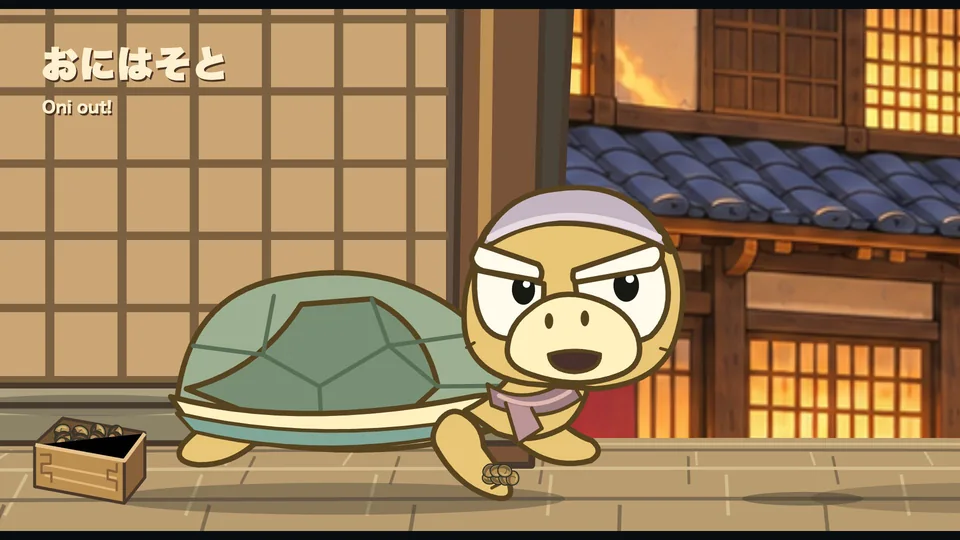
In Episode 6, Grandpa Kame gives Kero a little bag of beans. Now you know why!
The oni in Episode 6 has horns, fangs and a spiked club, but no tiger skin.
Say it in Japanese
-
せつぶん
Romaji: setsubun
Setsubun, “season split”
-
おに
Romaji: oni
an oni, a Japanese ogre
-
まめ
Romaji: mame
beans
-
いりまめ
Romaji: irimame
roasted beans
-
おにはそと!
ふくはうち! Romaji: oni wa soto! fuku wa uchi! Oni out! Luck in! Here は is said “wa”. -
まめまき
Romaji: mamemaki
throwing the beans
-
ふくまめ
Romaji: fukumame
lucky beans
-
かなぼう
Romaji: kanabou
a big iron club
-
ついな
Romaji: tsuina
the old ceremony to chase away evil
-
えほうまき
Romaji: ehoumaki
a big sushi roll for Setsubun
Where I checked these facts
Published . Most of these pages are in Japanese.
- Ministry of Agriculture (MAFF): Setsubun food culture
- MAFF aff magazine, February 2021 (the 1425 diary, beans and word jokes)
- MAFF: why beans on Setsubun
- MAFF Hokkaido: Setsubun and peanuts
- Consumer Affairs Agency: beans and small children (2023)
- Consumer Affairs Agency: beans and small children (2026)
- National Astronomical Observatory of Japan: 2027 almanac
- Kotobank: Setsubun
- Kotobank: tsuina
- Kotobank: oni
- nippon.com: Setsubun, the bean throwing festival
- nippon.com: why Setsubun moves
- Sensoji: Setsubun
- Naritasan Shinshoji: events of the year
- Kinpusenji: Setsubun